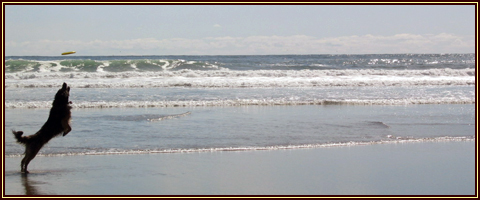
Great Danes Dogs

Tuesday, September 28th, 2010

Temperament: Known as the gentle giant, the Nice Dane, despite its huge dimension is definitely a really friendly canine with a loving nature. They are people orientated canines that need and like to be around their human family, they’re also very loyal. As a result of they grow so fast, coaching them wants to begin early. Though it is unlikely they are going to ever be aggressive, due to their measurement they can be tough to handle if not properly trained. They make nice household pets as they’re type, affected person and get on well with kids and other pets. One habit they have a tendency to have is to lean towards you; that is their means of exhibiting love, and acquiring attention. That is regular conduct and is nothing to worry about, however it might cause an issue with small children.

Health Issues: Unfortunately, like many large dogs, the Great Dane is susceptible to quite just a few illnesses. Bloat is a standard subject for them and up to 40% of instances are fatal, bloat is the place the abdomen twists and emergency surgery is needed immediately. On account of how fast they grow (from start to a human grownup weight in 12 months) they can suffer from a verity of bone issues, these can include hip dysplasia, wobblers syndrome, hypertrophic osteodystrophy (HOD), pano (panosteitis) and osteochondritis dissecans (OCD).

The Nice Danes are also susceptible to most cancers, though individuals say [that a] Great Dane ate up natural meals rather than manufactured meals have a decrease risk. In 2004 an American survey showed that the most typical fatal condition in Nice Danes is dilated cardiomyopathy, this can be a degenerative condition that affects the heart, and sadly there isn’t any cure. The typical life span for them is round 10 years, although they’ve been known to reside to round 13 years.

Grooming: The Great Dane is an average shedder that may want every day brushing; they will even want their nails trimmed regularly. They only have to be bathed when obligatory, and as a result of their large measurement this may be quite awkward, so it’s best to brush them typically and effectively to help increase the time wanted between baths.

Living Conditions: Nice Danes need common exercise, though should not do more than walking until they are over a 12 months old. They are going to live effective in an condominium as they’re comparatively inactive indoors, as a result of fact they are such people loving animals they won’t address living alone outside.

At Infoondogs.org find out all about] great dane dog house , great dane dogs and great dane dog information.

Dog Training Solutions To Stop Dog Aggression.

Monday, September 27th, 2010

Aggression is as natural to a dog as howling.Some dogs are raised specifically for their aggressive tendencies. If your pet is bred to hunt, kill or guard fiercely, you won’t be able to change or eliminate that behavior regardless of efforts. Obviously, a crucial first step toward having a happy, gentle house pet is to bring home one of an amiable breed.

Have a look at this article on Dog Training Boston .

Understanding The Causes Of Dog Aggression.

Generally gentle dogs are forced to be aggressive by certain circumstnces. Focusing on the cause of dog aggression is the key to dealing with it. Read on for situations that unleash a dog’s aggressive tendencies:

1. Pain. This does not require a lenghty discussion. Someone in pain would normally lash out. In the case of dogs, even the mildest pain can cause them to be aggressive. It’s an instinctive reaction to want to take yourself away from what makes the pain intense. For example, if your dog has been run over by a car, feeling for broken bones can be excruciating for your dog and would likely make him bite from pain.

2. Fear. New situations, enivironment, places and even people stir fear in your dog. Their natural tendency for self-preservation can turn a calm dog into a wild beast. Dogs who display unfounded aggression toward others, including people, lack appropriate social skills. Sheltered dogs see new people or animals as threats.

Check this information on Review Instant Dog Training Videos.

3. Territorial Instinct. Dogs guard their onwers, homes, toys, puppies – whatever they consider their own from perceived threats. It’s instinct to them. Anyone and anything a dog cares for, he protects with all he has. This isn’t the problematic type of aggression as most owners want their dogs to protect them and their property.

4. Dominance. Dogs vying for the leadership of a pack exhibit this type of aggression. This is often displayed by dogs who want to lead by nature.Sensing a leadership weakness, dogs instinctively vie to fill the role. When it’s up for grabs, they would fight for the top position. For the cohesiveness of the pack and survival of the species, this is essential. Dominance aggression is nature’s way of helping the pack organize with authority.

Strategies To Keep Control.

With this understanding, don’t you feel more capable to tackle dog aggression?

When your dog is in obvious pain, help him feel more comfortable; he won’t think about biting if you help him. Convey clearly to your dog that you and every person in the family are higher-ranking members of the pack. Demonstrating this authority line early on ensures your dog obeys you and respects everyone in the family. If your dog’s aggression is clearly borne of unfounded fear, help him resolve the fear.

Pain is probably the easiest trigger to address. To curb fear and dominance aggression, dogs must be trained to socialize and have a clear leader. The best step is to begin as soon as you bring your new pet home. When dealing with aggression in adult dogs, don’t be unwilling to consult professionals.

For more information on dog aggression, check this page on Ways To Stop Dog Aggression.

Dog Leash Training.

Monday, September 27th, 2010

If you’d like to bring your dog out, leash training becomes necessary. Dogs stepping outside of their owner’s fences are mandataed to be on a leash. Although it sounds a little harsh, leash training is an important part of dog schooling. Below are pracitcal guide for training your dog with a leash.

You might want to read Dove Cresswell puppy & dog training online review to help with your dog training .

1. Keep a steady steam of patience. Dogs train at their own pace. Your dog’s learning depends on two things: your commitment and his breed. Beagles need more intense training as they easily get distracted. Bichon Frises are not as smart as Collies; they won’t learn as fast. Of course, you must follow guidelines and be firm and consistent when training. If you fail to be consistent, dogs get confused and your training will last weeks longer.

2. Age has a bearing. Puppies settle in to a collar and leash faster than adult dogs. If they had not had a leash prior, adult dogs need an adjustment period.

3. Direct your dog’s attention to the training. In whatever way you do it, it is essential for your dog to be responsive during training. If he has a short attention span, don’t train in places where he’s easily distracted. Like, if you’re outside, train at the back, rather than the front yard. Passing cars and passersby divide your dog’s attention. If your trainee is a hyperactive type, exercise him vigorously to tire him a little; he’s likely to pay attention better that way.

Have a look at Golden Retriever Training Information to find out more on training this breed.

Pick Your Equipment.

Today, you have more than one collar and leash option to help you and your dog achieve your training goals. The customary fat leash is usually enough for instilling obedience in young puppies. In rare cases, you might need any of these specialized training tools to be more effective:

1. Head Collar.This kind of collar is very much like a horse’s collar. It allows you gentle control of your dog with two loops – one around the mouth, the other around the neck. For preventing your dog from a habit of lounging, this is an excellent choice. Your dog is still able to move his mouth freely; the collar effectively prevents lounging as it turns a forward movement of the head into a sideways motion.

2. Retractable leash. This leash has a push-button control that lets you take up slack quickly. This is excellent if you’re allowing your dog to walk around further away from you. Your dog can walk at a certain distance ahead of you and you need not worry. However, if you’d like your dog to learn “heel”, don’t let him get too far away from you.

3. Choke/Prong Collars. From its name, you’d likely have surmised this collar uses pain to train. Attached to the leash, this collar won’t let your dog stray. You can tighten the collar to choke him a bit or jab him with spikes to remind him not to pull. Your purpose is only to cause your dog some discomfort with a little pain, not seriously hurt him for misbehaving.

For more on this, see this article on How To Leash Training A Dog.

A Few Often Employed Approaches Used In Dog Training Courses

Sunday, September 26th, 2010

Dogs are just like humans in many ways. They can develop their own personalities and behaviors which like a child, has to be positively influenced. This is what a dog training course is for.

There are many courses online as well as offline to choose from. However, no two programs are the same. Though most of them work, you have to explore what are the approaches they use in training your dog. There will advantages and drawbacks to each of those methods. Therefore it is imperative that you think it through to figure out what’s most suitable dog training advice for you and your dog.

Just to provide you with a fundamental overview, here are the 5 typical approaches utilized in instruction dogs on the internet:

1. Clicking Sound : You will need to use a clicker in this method of training your dog. At the onset of the training, the dog will hear the clicking sound once he does something good. He will also receive a reward along with it. At one point, the reward will be gradually eliminated but he will still hear the clicking as a sort of reward for his good behavior.

2. Reward Training : Have you ever seen an show in the zoo featuring animals? Have you ever wondered why animals follow the commands of its trainers? Well, this is exactly the type of training it entails to get a dog or any animal behave in the way you want him to. If you give him a reward once you find his behavior very good, he’ll want to do anything you say because he’s in it for the treat.

3. Whistle Training: An special kind of whistle will be used in this type of training. This ultrasonic device are made for animals as people can’t distinguish the whistle it produces. This is a great way to hold the attention of your dog but you will have to spend some time on necessary training first to do this yourself.

4. Dog Whispering : You’ve heard of horse whispering, right? This is just exactly the same training but only it’s done on dogs. This can only be done by highly trained professionals. And there are some who would assert that only few are gifted to effectively employ this method.

5. Collar Instruction : This type of instruction you are able to effortlessly emulate and do at home. You’ll have to put on a head collar which will usually loosely manage the movements with the canine. It’s a really great way to obtain your dog’s consideration and direct him wherever you would like him to go.

The a number of canine instruction programs will most most likely utilize a mix of those typical techniques and a number of others. They might also have some tricks up their sleeve to successfully train a canine. Nevertheless, do keep in mind that it’s nevertheless up to you to give the effort and make the option to make the canine instruction efficient.

Ways To Address You Dog’s Digging.

Saturday, September 25th, 2010


Usually dogs dig due to boredom.In cases other than to boredom, it’s instinct.Seemingly harmless play, digging can be risky to your dog if he digs under your fence to let himself out of your yard.Digging poses a serious risk in such events.Your dog becomes a problem if his digging behavior is left as it is.Leaving your dog unsupervised will quickly turn your yard into an ugly mess.


Check this information on Prevent Dog Chasing.


Knowing Why is Crucial.


What motivates your dog’s digging? Find out so you’d know what to do with the problem.Average dog owners such as yourself, can do that.Carefully observe your pet for a week or two.Paying enough attention makes you realize certain behavioral patterns.Note the digging motivations.Watching your dog carefully will allow you to recognize signs of their digging urge.


If your dog is digging everywhere, obviously hyperactive, this is an unmistakable sign of boredom digging.Walk your dog around the block.Hour-long rigorous exercises everday positively channels your dog’s hyperactivity and keeps him content.Because they’re working animals, dogs innately have excess energy supplies.Dogs need to spend that energy.


Read this interesting information on German Shepherd Training .


If your dog is fond of garden-digging, there are a variety of reasons for that.Interesting smells, sights and sounds are plenty in a garden.Manures used for planting are very striking to scent-hounding dogs.Sweet-smelling flowers get your dog nosy enough to sniff and dig.Dogs find plenty of entertaining things in the garden.Plants for one can certainly arouse a dog’s curiousity.When this is the case, use a  sprinkler that’s connected to the end of a water hose.


When your dog is prepping to dig in the garden, turn the tap on to spray him.Make sure the dog associates the wter with the sprinkler and not with you.If he sees you began the spraying, he’d continue digging when you’re not there.When a dog thinks the sprinkler’s spraying him, he’s not likely to dig when he notices it in the garden.


If this fails, give your dog a break and assign his digging spot in the garden.Just like small children, give your pet a  sandbox, doggie version.Bury toys and treats to the ground to train your dog to dig there specifically.Start by only half-burying your treats so that the other half sticks out and your dog notices it.Encourage this behavior by acting excited and telling your dog to dig the buried treasure up.If he starts digging outside of the area, lure him back there.

Read further on this dog problem with Prevent Dog Digging.


House Pets – Why Should I Try That?

Saturday, September 25th, 2010

The possibility of choosing house pets is incredibly wide given the fact that the selection follows criteria such as the owner’s personality, home environment, age, lifestyle and so much more, whether you think about tropical fishes such as cichlids or turtle, cat, dogs.. Cats and dogs make great pets for houses and apartments, but their size matters a lot. They are almost always kept indoors, except for the times when you need to take them for a walk, grooming or for physical training. Fish, turtles, canaries and Guinea pigs are on the list of preferences too.

Large dog breeds are usually grown by people who afford maintenance and overall pet care costs for such animals. Moreover, there may be special grooming bath specific to certain breeds, not to mention that large dogs need room to play. Long-haired cats can also be a nuisance if not groomed properly. Guide yourself by more than first impressions when choosing house pets.

It is unfair to buy or adopt pets on a whim and then realize you don’t like them. Be reasonable and practical, because it is cruel to toy with a life. The decision to take a four-legged companion involves a high level of responsibility: there are medical needs, diet concerns, old age, physical training challenges and so much more. Evaluate your situation correctly in order to determine whether you need house pets or not. Therefore, carefully choose house pets, using both heart and reason.

There is a special category of house pets trained to assist physically challenged people. Dogs receive a professional certification at the completion of the training for skill development. Only then are they entrusted to a disabled user. Among the breeds with an almost innate talent for such ‘jobs’ golden retrievers occupy a top position in people’s preferences.

Health insurance could be a problem for many dog owners. Vet costs are inevitable when you have a pet, but you can make savings by creating a health insurance policy. Such services are now widely available, although in the context of the recession, fewer people manage to insure their house pets on a regular basis. If you can afford it, why not take advantage of such a facility?

Freshwater Aquarium Temperature – Things You Should Know

Saturday, September 25th, 2010

What is the Best Temperature?

So your tank is almost ready, you have added the gravel and filled it with water. Now you need to set your freshwater aquarium temperature with the heater and thermostat.   What temperature should that be?   As a rule most freshwater aquariums are best kept at around 73 to 82 degrees Fahrenheit (23 to 28 Celsius).   What you actually set the temperature at will depend upon whether you live in a warm or cool climate.    The reason being that you want to avoid freshwater aquarium temperature fluctuations as far as possible.   So if you live in a warm climate you would want to set the thermostat at about 80 degrees Fahrenheit on the other hand in a cooler climate 75 degrees Fahrenheit would be best.   This has the effect of minimising the impact of ambient temperature changes on the freshwater aquarium temperature.

You should bear in mind that the warmer the water the less oxygen it can hold and therefore higher levels of aeration should be employed.   It is also worth mentioning that an acrylic tank is a much better insulator than a glass tank and a reasonable tight fitting lid will also reduce temperature fluctuations.

In general the actual set temperature is less important than sudden changes in temperature.      Rapid temperature rises or falls really stress out you fish making them prone to disease and can kill them.   Large scale freshwater aquarium temperature changes in less than 24 hours cause a number of fish problems including at worst the ‘shakes’ or ‘shimmies’, ichthyophthritis (ick), fungus and at best a general decline in health.

What Size Heater?

The quantity of water to heat and the temperature difference between the room and the heated water dictates the required heater wattage.   As a general rule you need 2 watts for raising each gallon of water 5 degrees above surrounding temperature.   Two heaters may be required for larger tanks which have high temperature differentials.   In such cases they should be put at each end of the tank.

You should not have a larger wattage heater than as calculated above.   Two reasons for this are one, a very powerful heater as it cycles with the thermostat could cause a rapid temperature rise and two, if the thermostat goes wrong a large heating element would fry your fish within a few hours.

What kinds of heaters are there?

There are three kinds of heater, all work well.

1.   Immersible heaters.    These are inexpensive and easily found so they are the most common.    They dangle into the water hanging on the back or side of the tank.   Above the water surface there is a temperature control.   Their disadvantage is that some people consider them to be an eyesore and prefer the heater to be hidden from view.

2.   Submersible heaters.   As the name implies these can be completely submerged in the aquarium.   Their biggest advantage is that they can be easily hidden behind plants and rocks.   These kinds of heaters are more robust and easily keep a set tank temperature.   While they cost more than immersible heaters they are not expensive, they are easy to use and being slimline easy to hide.

3.   Filter heaters.   These are a really good option because they keep the freshwater aquarium temperature even throughout the tank.   They heat the water as it moves through a filter.   They are the most expensive heater type but they do operate as a filter unit as well.   The big plus of this type of heater is that it is outside your aquarium, so it doesn’t take up space inside and you don’t see it at all!

Don’t Forget a Themometer!

One final word, make sure you have a good thermometer in your tank. Before use chack that its calibrations are correct. After that you should check the reading every day on a regular basis. The best time is to glance at it as you feed your fish. This will make you aware of any freshwater aquarium temperature troubles before they affect the health of your precious fish.

Conclusion

So That’s it.   The actual freshwater aquarium temperature depends upon where you live but whatever it is it should be tightly comtrolled by your thermostat.   Keeping temperature fluctuations to a minimum is much more important than what you select as your freshwater aquarium temperature.

Not All Pet Insurance Policies Are The Same

Thursday, September 23rd, 2010

Pet owners have been turning to pet health insurance coverage — which works pretty much like medical coverage for people — to assist them to pay for the cost of the general and emergency veterinary services that can arise. Different pet insurance organizations offer a variety of policies that vary based on restrictions, services covered and monthly fees. Animal owners find that these insurance policies help them manage not only emergency animal clinic cots that may necessitate surgeries, lab fees and prolonged care, but also cover the expense of standard checkups and pet health maintenance.


individuals that have been forced to make the tough choices when their pets had to go to the emergency animal hospital welcome the chance to have pet insurance as a much needed precaution against dealing with the possibility of not having the needed funds to treat for their animal properly. Some premium insurance even expand their coverage to dental care, boarding and grooming. One of the most prominent companies selling pet coverage is VPI Insurance, which they claim 9 out of 10 vets suggest when asked by their clients regarding which institution to choose. Pets’ Best Insurance offers a straight eighty percent reimbursement minus the deductible.


When you think that it can cost around two to six thousand to get standard vet services for one pet during its life, it is no hard to see how emergency veterinary services can accumulate expenses of more than ten thousand dollars. One of the reasons is because many of the technologies used for human treatments, such as transplants, transfusions and radiation therapy, are also available to veterinarians to diagnose and care for their patients. Of course, the expense is no different for an animal or human, so as a result the fees are identical you would anticipate to pay at your normal physician. Of course, they are entirely as effective on pets as humans, so many pet owners wish to have the choice of giving such procedures for their beloved animals.


The most frequent incidents protected by insurance policies are longterm hospital stays, prescriptions, emergency care, lab tests and x-rays. Some plans allow treatment for the animal by any vet, posing no restrictions on their qualifications or enrollment in their program. Luckily, pet insurance has smaller deductibles than normal medical insurance, normally around fifty dollars, and often there is a one-time annual deduction, so if repeated visits are required, the insurance pays for a large portion of the bill.


Pet insurance customers have reported that even the less expensive policies have proven to be a good investment by saving them the cost of normal pet medications and emergency animal clinic expenses. Naturally, a few companies set limits for pre-existing conditions and very old pets, although others offer insurance for all pets in your residence, no matter what age age. Interested consumers are able to customize their coverage to suit their particular circumstances, and many services offer free quotes online. When you select a more expensive deductible, your monthly payments are obviously decreased, however if you decide to have a low deductible, you will need to deal with less up front cost.

Some Of The Great Pets People Often Miss Out On

Wednesday, September 22nd, 2010

There are so many different types of pet out there, there is no doubt on this and one of the most difficult things is choosing a pet to actually have. After all, a pet is a long time purchase in many cases and you have to be careful you treat it with the respect it deserves.


There are also many pets that a lot of people will not buy because they do not think of them as the main ones and you are actually going to be missing out here because some of them are not only easy to look after but are really interesting to own too.


Mice and Rats

A lot of people do not go after things like Mice and Rats because they think they are unclean and disgusting and this is not true at all. there are wild ones out there and you need to steer clear of these because they are dangerous but other than this the pets are going to be fine. contrary to wha people believe, these animals are not dirty or aggressive at all, they are very affectionate. They enjoy the time they spend with people and should be handled daily. they really do love this time and will learn to appreciate it.


Tropical Fish

Having fish as pets is actually not something that lot of people do because they think they are a bit boring but if you get the right ones they can be fascinating. If you get the right fish tanks along with aquarium plants you will find them to be really interesting to watch. You will find the tropical fish tank to be one of the best ways to do things as these fish are a lot more exotic and interesting to keep.


looking after fish sounds like such an easy thing to do but it can prove to be very challenging.

As long as you keep your pets happy you will be fine!

What You Should Know – Natural Flea Control

Wednesday, September 22nd, 2010

Fleas can be one of the most irritating things of having a pet. Your pet also gets highly uncomfortable by them. They can bite your pet and people also. There are many ways to get rid of these fleas which are always become the source of itchiness and annoyances for your pets as well. You should adopt natural ways to remove these unwelcoming guests from your home. There are many chemicals for flea control but these chemicals can be harmful for you and for your pet. That’s why majority of people remain worried once own a pet and do not use chemicals in order to remove fleas from their homes.

If you’ve talked to your vet about why your pet eats grass or looked for answers online or in books, chances are you’ve found many different answers from different sources. Some sources warn of extreme danger, and some simply state that this is a natural thing, and you shouldn’t worry about it. So, what information do you trust? Well, the first step is to separate fact from theory or just plain fiction. That’s not as difficult as it may sound. Let’s look at the most asked question:

Why does my dog/cat eat grass? What we know about this is, frankly, that we don’t know. Until we learn to speak Cat or Dog, we can’t simply ask, “Why do you do that?” Go ahead, try it. I assure you, your pet will give you that look that says, “I can’t understand you. Why don’t you learn to speak?”

So, while there are many theories, the fact is that we don’t have a real answer. That may not be the answer you were looking for, but it is the absolute truth of the matter. We can’t really know if it tastes good to them or if they do it because they need to regurgitate, or simply because their ancestors did it. So, until we learn to better communicate with our four-legged friends, we’ll just have to focus on whether it’s a good or bad thing for our pets. Let the guys and girls in the lab coats worry about why.

See how easy that is? There’s nothing to this scientific stuff, right? Now, let’s take a few more of the questions and apply our newly-acquired problem solving skills:

Is grass an essential part of my pet’s diet?
What we know:

  • Our pets need fiber as part of a balanced diet.
  • Grass is mostly fiber.
  • Cows graze. Horses graze. They don’t throw up when they eat grass. (Rumination doesn’t count.)
  • Horses, cows, sheep and other regular grazers have special enzymes in their systems that help digest grass.
  • Dogs and cats don’t have the above-mentioned enzymes in their systems.
  • Dogs and cats are very likely to throw up after eating a quantity of grass.
  • If ingested grass isn’t regurgitated by a cat or dog, it will be passed, undigested, in the stool.
  • Feral cats and dogs, as well as wild canine and feline animals will graze occasionally and it seems to have the same effect on them.
  • Dogs and cats that aren’t allowed to eat grass don’t suffer any directly related ill effects.

What we might conclude:
While grazing might be tasty or simply habitual for your dog or cat, it doesn’t appear to be necessary for good health. Fiber comes in many forms and if your pet is getting a well-balanced diet, it will include more suitable sources of fiber.

Grooming/Bathing: you should comb your pet on regular basis and trim it’s hair. It will also reduce the risk of presence of fleas and you can easily control fleas

Signature***********************
The government’s Making Home Affordable Mortgage Refinance program
Mortgage refinance or new home loan
Home Buyer EDUCATION