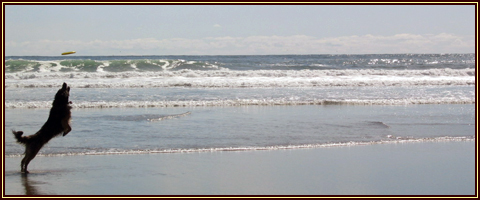
Drilling Your Dog With Clicker Training

Tuesday, September 14th, 2010


Of course, clicker training is also effective for young puppies.As is the standard in dog training, the reason for clicker training is to have dogs associate the sound of the click with a specific behavior, hopefully positive.

At this juncture, you may want to see Canis Clickerraining Academy Review.

Why behavior education holds clicker training is high esteem is no surprise.The clicking sound relays to the dog the exact behavior you are looking for; it tells him why you’re rewarding him.

How the Clicking Trains.

Perhaps because of positive feedback, you’d now like to learn how clicker training works so you can use it on your little furry friend or to teach your dear old companion some fancy new tricks.This training method allows your dog to understand the treats are for doing your specific command.To illustrate, when you’re training him to sit, you can lightly push his rump to the ground as you repeat the word, “Sit.”.At the exact moment his fanny hits the ground, click then give him a treat.Perform this exercise several times.Soon, your pet understands the click, the command and the treat come together.

See an interesting article on Teach Dog Tricks.

Dog Clicker Training.

Don’t get too impressed with what you read here; validate the claims.Fair warning: when you embark on clicker training your dog, always remember.

Give your dog a treat every time you let him hear the clicking sound.The clicker is a instrument for training.Use it solely during your training schedules.When your dog understands orders and carries it out perfectly well, you don’t need the clicker any longer.

Persist.Just like humans, dogs have different IQs.Even if they have a degree of intelligence, they’re still animals.It’s logical to not have high expectations of a dog especially if this is their first time being trained.Don’t push yourself and your dog too hard.

End every training session on a good note.Your dog won’t forget the final thing that occured at each session.If things don’t go as planned, don’t let it end with your dog feeling bad; he’d be reluctant to try again.To make sure it ends well, go back to a command he has already learned and you know he can manage to obey well.Run him through the sit command two more times before you say the session is over for the day.Be mindful of clicking and rewarding him with a rub behind the ears or a treat.He should now be enthusiastic for the next session.

Be Precise.

Because it’s all about precise timing, you want to make sure you’re doing it correctly.Your dog needs your timing to be perfect to easily connect the commands with the sound of the clicks.When you use the clicker with your dog within hearng range, be sure you’ve trained your clicks to be precise.

Looking to learn more on this? See How To Clicker Train A Dog .

Weimaraner Training Tips For Amateurs

Tuesday, September 14th, 2010

Okay, you just brought home your new Weimaraner and you’re ready to teach it everything you want it to do. You want your new Weimaraner to learn to sit, shake and especially be house trained. No matter what you want to do, you ought to make use of several of the following Weimaraner tips for training, particularly when you are new to this process altogether. The very first tip is for you, the trainer, to enjoy yourself. Number two is that you are always consistent, and number three is that you make sure what you want the dog to do is obvious to the dog. You can get the most effective Weimaraner training tips from local professional trainers, but this article ought to get your through the basics of training before you move on to the more advanced techniques.

Enjoy Yourself

The first training tip for you and your Weimaraner is that you have fun with the training sessions. While there are several ways to start when training your dog, just make sure as you try each of them you do so with an upbeat, fun oriented attitude. If you are not enjoying yourself, then your dog won’t be having fun either, and probably won’t be paying attention to you as much as you hope. Now is the time for you to familiarize yourself with the dog and bond with him; thus, make this a quality time for the both of you, and you will see your hard work rewarded when the dog complies to your commands.

Consistency is the key to good training.

It’s important that your training efforts are always consistent. This is your second tip for Weimaraner training. Being consistent means repeating the same exercise or command as often as possible till your dog understands the new behavior being asked for. If you try one training metho9d and then switch to another your dog will get confused. You can’t expect good results if you aren’t consistent. The dog must understand what you are trying to get him to do, and he will only acquire this new behavior if you are repetitive and reward him every time he does things right.

You Must Always Be Clear In What You Are Asking For

This third tip might seem obvious. Be sure your Weimaraner knows what you expect him to do. If your dog is confused and doesn’t really know what it is you are trying to get him to do he won’t be able to perform the way you want him to. This could prove to be very upsetting for both you and the dog, as he wishes to make you happy and cannot understand why you are dissatisfied. The best thing to do is make sure you show the dog exactly what you want it to do. Take it’s paw in your own hand and show it what “SHAKE” means. Keep repeating this cycle as often as it takes to make the lights come on.

If you stick to these Weimaraner training tips, the dog will be highly trained in no time, and you will be able to have a wonderful, fulfilling relationship with man’s best friend.

If you need other info, you should look at: Weimaraner Training


If you found this article useful, then you need to check out a review I think you’ll enjoy: Stop Dog Whining


Raising Turkeys And Chickens Together – Is It Doable?

Sunday, September 12th, 2010

If you are raising either chickens or turkeys the next logical step would be to raise the other one as well but is that such a swell idea?

Raising turkeys and chickens together is not a good idea but it can be done with a little bit more work.

Why can’t you raise turkeys and chickens together?

Turkey care is not quite as easy as hatching turkey eggs and watching them grow although it can be very easy. There are some things that need to be considered when raising turkeys and chickens together.

The main reason that you shouldn’t raise them together is because of diseases.  Chickens are immune to some diseases that the turkeys can get that would be life threatening to them.  Chickens can also be a carrier to these diseases.  If you put them both together you run a big risk that all of your turkeys will be affected and die. That will make it very hard for turkey breeding.

Another problem you will run into is that they do not eat the same things and have different nutritional requirements.  If you put them both together then it is going to be really hard for you to regulate their diets.

Without the proper nutrition in their diets you run the risk that both your turkeys and chickens are going to have health problems.

The third reason is that chickens and turkeys do not have the same type of personality so you could get into trouble if they decide not to get along.

So how can you actually raise chickens and turkeys together?

If you have a large enough yard and would really like to raise both of them then you need to make sure that they both have their own separate spots.  Make sure though that there is some distance between the two areas so that you do not have the problem of diseases spreading.

By keeping them in their own seperate spots you can have the benefits of raising both chickens and turkeys without having to worry about them harming each other.

How To Attract The Downy Woodpecker To Your Backyard

Sunday, September 12th, 2010

The downy woodpecker is the smallest and yet it is the most common woodpecker in the United States. It is found throughout North America and is an excellent site to see fluttering through your backyard. In order to attract the downy woodpecker to your home, consider the investment in a quality sunflower feeder. They will continuously come to visit you if you provide these birds with a regular supply of their favorite foods.

Choosing the Right Sunflower Feeder
A wide range of sunflower feeder products are on the market that can work well, but there are a few things to remember before you buy these, in particular for the downy woodpecker.

  • This particular woodpecker will dine mostly on insects or black oil sunflower seeds from feeders, but it will do well with suet bird food, too. You can choose both to place in your yard. We recommend both suet and black-oil sunflower seeds for optimal results!
  • Keep in mind that the downy woodpecker loves to eat insects. Purchase a bird feeder you can mount near wooded areas so that they have a regular supply of the food they love.
  • When these birds create a nest, the male will usually try to create a cavity in dead wood, or dead portions of living trees. If you have an old woodpile, place your bird feeder in this area. These birds have four to five white eggs per clutch.
  • Its food source must be approximal to its living quarters. Choose a sunflower feeder that hangs from a tree branch or set up a pole nestled into the wooded area for the best results.

Choose a bird feeder to supplies several areas for the bird to cling and hang. These birds are able to hang upside down and they will enjoy a bird feeder that gives them plenty of space to do this. In addition to other bird foods, one must definitely include suet in the woodpecker diet. Therefore, attempt to select a sunflower feeder with a suet cage below it. This will keep the Downy Woodpeckers in your yard on a regular basis.

It is important to note the Downy Woodpecker likes to eat insects. Avoid using chemicals on grasses and in wooded areas that would decrease the availability of insects as this will hold back these woodpeckers from calling your area home. The sunflower feeder will lure these birds to your garden, but the woodpeckers will diversify their food source.

Tricks To Stop Your Dog’s Digging

Saturday, September 11th, 2010

Dogs exhibit many behaviors that might make their masters anxious. They may run away, yap ceaselessly, defecate the inside of your home or chew on anything they can get their teeth on. A lot of these issues are preventable with necessary dog training from the start of your dog’s puppy days. The right training necessitates that the owner is unswerving when it comes to rewarding their dog for good performance or punishing them for bad behaviors. A very simple way to correct the dog’s behavior is to give attention when they are exhibiting good behavior and ignoring them when the exhibit bad behavior.  Dogs are very motivated by their owner’s attention.  One more issue that is common with dogs is the act of digging.

The Causes & Resolutions

It is best if the owner of the dog considers the reason why the dog may be digging.  There can be several causes and determining why your dog digs is the key to stopping the behavior. Some dogs really like to dig. Dogs sometimes dig when they need to be exercised more and have more time for playing. Other dogs might be looking for a way to get out of the yard in order to find a mate if they aren’t fixed. It could be that some find delight by digging in recently turned soil or soil that has received a manure supplement. Some dogs dig in order to hide treats or food.  Other dogs, as a product of their breed, are known for digging.  Some other dogs enjoy creating a den to lie down in and this is why they dig.  

One of the keys to stopping this behavior and stop your dogs from digging is to make sure you play with them and give them adequate opportunities to exercise. In spite of the old adage, dogs can and do learn new tricks. A disinterested canine is often also a ruinous one, therefore a pet that has plentiful opportunities for physical exertion and exposure to novel experiences is less likely to destroy items in their paths.

An alternative method you could use to stop your dog from digging would be to shy away from giving him chew bones, which he may want to bury in the yard. Rather, snacks ought to be easily and quickly edible, leaving no remnants for the dog to store under the soil. Another strategy is to conceal filled balloons in the soil patches most frequently visited by the digging dog, such that the next time he attempts to burrow, a balloon will pop, frighten the hound, providing a sort of scolding that may serve to prevent a recurrence of the behavior. Canines fond of digging should always be watched while outside. Like so, if your dog goes to start digging, you could use a squirt gun to stun them or spray water on them with a hose to prevent your dog from digging again in the future.

If you would like to find good advices, take a look at: keep dogs from digging


If you’ve found this article helpful, you may also want to see my review posted here: Training Jack Russell Terrier


Pet Fencing – Problems With Installing Wooden Fences

Friday, September 10th, 2010

If you own pets, you’re probably immediately worry if they don’t come home when you expect them to. Dogs, for one, may wander too far off from where their owners live. They might go about inspecting trash bins, running after cars, and wander off to far to come home. One way to keep them fenced in is via installed traditional wooden fences. Still, this kind of pet fencing has its own set backs.

They might not be high enough to deter your dog from climbing over. That fence and the dog’s enthusiasm or desperation could end up hurting that animal. Consider also that not many have the extra time or skill to put up the wooden fences themselves. If you decide to push on by yourself, you’ll have to do much of the materials and tools shopping yourself. After sawing each fence post, you have to use a digger tool to make sure a third of the post is buried. Even after you do those there’s no guarantee the fence would work as you imagine it to.

You could of course hire a contractor to do these yourself. But if you’re renting, your contract might not allow you to do some digging around the rented property. Some people live in areas where ordinances prevent them from building such a set up.

You don’t have to spend so much effort putting up fences for which you might get fined and which might not keep you dog inside – an electronic fence. There are several available ways in which pet fencing works for you and your pet. The kind of set up most employed makes use of wires buried around a perimeter. As with many other fencing systems of this type, it also uses a collar your dog is to wear. When your dog approached the boundaries set, usually planted with marker flags, a warning sound is emitted by the collar. Should the animal keep walking past the boundaries, it receives a mild corrective shock.

Another pet fencing set ups involves no wires around a perimeter. One uses radio signals sent from a central source “marks” the area via the radius or range of reach of the transmission. Should the dog try to escape from the perimeter, the collar also sends out a warning prior to a static correction.

Training your dog to mind the warning and heed the shocks are needed. Again, the decision is up to the dog owner and his circumstances.

Ferret Disease Factos That Could Affect Your Ferret

Friday, September 10th, 2010

No-one wants their ferret to get ill. However being aware of potential illnesses and can make the difference and prevent something from becoming more serious further down the line.

Right now we’re going to take a look some of the most common signs of ill health and the likely course of action if your ferret does suffer ill-health. Of course if you notice anything unusual seek advice from your Vet as soon as possible. This is also a great resource… healthy ferret guide

Let’s take a look at some common ferret diseases and there related symptoms…

Ferret Disease 1 – Epizootic catarrhal enteritis (bit of a mouthful)

This is a viral disease that’s particularly common in North America. Common indications: Tired lacking oomph, green feces, being off their food.

Ferret Disease 2 – Diseases of the endocrine system

Often caused by a tumor that is affecting the adrenal gland. Common symptoms: Vomiting and diarrhea, becomes scrawnier, Blackened poop.

Ferret Disease 3 – Digestive system problems

Ferret diseases of the digestive tract can often come from improper feeding. To ensure your ferret has the best chance of avoiding a digestive complication you have to get their nutrition right. For further ferret diet advice check out: Diet for ferrets Common symptoms: Having a glazed look in their eye, seeming weaker than usual, not responding to you like normal, trouble passing water (esp. Males)

Ferret Disease 4 – Lymphoma

This is a cancer in organs such as bone marrow, lymph nodes, liver and spleen. Common symptoms: Swellings, weight loss, weak legged

Ferret Disease 5 – Parasites

This will usually occur in two different ways. It will either be an internal form (such as Heartworms) or external form (such as Fleas and Ticks). Common symptoms: Scratching ears, ears containing brown residue, seeing ticks or mites on your ferret, diarrhea, Mucus stools 

If you see any of the above symptoms, or any unusual symptoms for that matter, it’s important to get your Vet’s advice as soon as possible.

So what happens next? An animal health professional will examin a ferret and see what’s wrong.

Common ways of diagnosing ferret diseases

Many of the ways commonly used to diagnose ferret health problems are the same as those used with humans. It is likely the vet will one or a combination of urine and bodily samples, scans, examinations, and biopsies.

If your ferret turns out to be sick then your Vet will inform you of the recommended treatment

Common types of treatment for ferret diseases

If you do have a sick ferret your Vet may use a number of interventions to help them. These include using medication, surgery, radiotherapy or chemotherapy, or good old rest and heal approaches.  

Some ferret diseases are more common than others. You need to be alert to any indicators that your ferret is poorly and take them to the Vet, this is very important. However following the correct diet recommendations as well as good care advice is a key factor in preventing ferret disease.A great way to learn ferret health secrets is to check out: Care for your ferret

Tips On How To Administer Medicine To Your Cockatiel

Wednesday, September 8th, 2010

At some stage all cockatiel homeowners will need to medicate their birds. Most are unsure about easy methods to go about this with out hurting their birds.

If you have to medicate your cockatiel, find out out of your vet how often and in what quantities you will want to medicate your bird. Find out how long the therapy ought to last, and should you find that you’ve got forgotten a few of the directions when you get residence, be sure to name your vet and check, rather than make an error that might impression your cockatiel’s health.

Listed here are a number of the most typical ways of administering medicine to your cockatiel.

1. Medicating meals

This might embody adding the drugs to the birds food or pellets, or offering premedicated pellets. Another way is to add the remedy to the birds water supply, but this isn’t all the time as efficient because sick birds do not usually drink plenty of water, and the medicine would possibly make the water style humorous which will outcome within the bird refusing to drink it.

2. By Mouth

This can be a good route to take with smaller birds, as they’re easier to handle. Utilizing this technique, you’ll use a plastic syringe without the needle. Direct the syringe into the left aspect of the beak and purpose it in the direction of the right aspect of her throat. This is advisable in order that the remedy gets down the birds throat, and not into her lungs, where aspiration pneumonia can result.

3. By Injection

Avian veterinarians normally think about this the simplest technique of administering medication to birds. The most effective injection web site seems to be the chest, which has the best muscle mass. To do the injections your self, wrap your chook securely, however comfortably in a washcloth. Lay her on your lap along with her chest going through up in the direction of you. Utilizing the one hand maintain her head securely with your thumb and index finger, and with the opposite administer the injection. You’ll need to insert the injection at a couple of forty five degree angle into the chest. Bear in mind to alternate sides – you can inject within the left facet of the chest in the morning, and the precise in the evening. Remain calm and discuss to your hen in a soothing tone all through, and before you know it the task will likely be done.

4. Topical

It is a technique of applying the remedy on to the infected part. This kind of remedy is often used within the eyes, on the toes or in the nose in the case of sinus problems. Checkout more other helpful articles about dog food allergy, dog training academy and easy dog training

Wholesale Bird Cages – Best Shelter For Our Pet Birds

Wednesday, September 8th, 2010

Birds are actually lovable to look at. This kind of animal, like dogs, is also able to learning few little tricks that will certainly amaze you. That is why many individuals love birds and keep them as residence pets. Bird caretakers make it certain that their treasured pets are properly attended. They’ve their very own meals and beautiful chicken baths in their bird cages. How about their shelter? The fowl cage you provide them? Are you just specific with the issues seen inside their cage and never the cage itself? Do not forget that giving them one of the best shelter you can is really vital since that are simply artificial properties for them so additional consolation have to be given for them to feel that even being enclosed in a cage, they get pleasure from their life as birds. What you must present your birds are wholesale fowl cages.

Bulk hen housing is truly what your pet birds need. Purchasing your very own bulk chook houses is known as a practical factor to do. Like many different expensive fowl housing, a bulk chook cage is made out of robust sturdy materials to guarantee the client of a very long time use. Either indoor pet cages or outside pet cages, all are created just right to satisfy the individuals’s different demands and standards. As regards to indoor wholesale pet cages, there may be nothing to fret of damaging your home motif or theme. There are a lot of types of styles and designs that will certainly suit your taste and match your home interior decoration. For outside wholesale pet cages, sturdy and harder materials are being applied for protection from exterior detrimental components comparable to rain and an excessive amount of heat of the sun. Subsequently there isn’t a want to fret of simple cage injury and worn-out.

What’s even more exciting with a bulk hen house is the great array of types and designs. Your birds of their cages will surely look much more enticing that the whole household and even the guests will enjoy. Ornamental wholesale fowl pet cages and stylish wholesale hen pet cages are readily available for you and your birds. You will never ask for more. Whole hen cage satisfaction will likely be achieved.

Giving our birds the best shelter for them is just not impossible. Be one of the many customers who have tried and now are patronizers of best wholesale hen cages. You may store at any pet shops close to you and even on the internet. Great gadgets, nice costs, nice deals! You will never regret choosing wholesale chook cages.

So why settle with the retail ones? Go with wholesale bird cages now! Be practical and give your loving birds the entire care and luxury they deserve. Find more other useful articles about training collar for dogs, service dog training and guard dog training centre

The Importance Of Freshwater Aquarium PH

Tuesday, September 7th, 2010

PH measures the degree of acidity or alkalinity present in the water of your aquarium.    The scale ranges from 0 to 14 with 0 being the most acidic, 7 being neutral, and 14 being the most alkaline.   Most fish thrive in a pH range of 6.4 to 7.8 but there are exceptions.

The ph scale is logarithmic which means in simple terms that a very small change in value is a very large change in acidity or alkalinity.

It is changes in pH value that affect your fish much more than the actual pH value.  While a fish may prefer a pH of 7.2 it will most likely be perfectly happy with a pH of 6.7.   However the same fish will become extremely stressed if you have a pH swing of 0.3 over the course of a day.

Most aquarists deal with the pH issue by keeping it as constant as possible and getting their fish used to living in that environment.   Constant measns that the pH should nt range by any more than 0.2 over 24 hours.

In some cases breeding only takes place at a particular pH value.   If you plan to breed a certain species, research the range of pH it finds acceptable to breed in.    Some varieties are easily pleased while others have a very small range.   This is probably the only good reason why you might want to aim for a particular pH value.

Factors Affecting pH

  • Biological filtration As everyone knows, good filtration is one of the essentials of a well stocked aquarium.   Biological filters reduce pH because they release carbon dioxide into the water.
  • Carbonate Hardness Carbonate hardness or kH is a measurement of the carbonate hardness of your water.   The harder your water i.e. the higher its kH then the better the water is at neutralising acids without a major change in pH.   It is called your water’s ‘buffering capacity’, generally speaking, kH should be above 4.5.

Adjusting pH

Changing the water regularly (which you should be doing anyway)  is a good way of keeping the pH at an appropriate level.

Acclimatising your fish to the pH provided is the best way to deal with pH but you can change it as shown below.

How to Lower the pH

  • Filtering water over peat
  • Add bogwood to the tank
  • Inject carbon dioxide CO2
  • Use a commercial acid buffer
  • Water changes with softened water or RO/DI (Reverse Osmosis/De-Ionized) water

How to Raise the pH
Raising the pH makes the ammonia in the water more toxic to your fish so this should be done with great care.

  • Aerate the water, to drive off excess carbon dioxide (CO2)
  • Filter over coral or limestone
  • Add rocks containing limestone to the tank or use a coral sand substrate
  • Use a commercial alkaline buffer

Conclusion

It is much more important to have a stable pH than to have a specific value for your pH.   To obtain a reasonably stable pH the carbonate hardness should be about 5-6 dH so that the water has a reasonable ‘buffering capacity’.

Even small swings of more than 0.2 pH in a day can cause your fish to die.   You should therefore not attempt to tamper with the pH unless you have a very good reason for doing so.

For more information on freshwater aquarium pH go to my website www.freshwateraquariumsecretsonline.com